Taking & Recording Vital Signs
1 credit hour · Instructor: Jason Young, DC
A focused single-module course on measuring and documenting patient vital signs, with a downloadable practice log.
14-day refund if you haven't passed the final exam or received a certificate. See our Terms.
SAMPLE
Certificate of Completion
Sample Student
Taking & Recording Vital Signs
Verification: CS-SAMPLE-0000
What Oregon requires — and how this course covers it
[OWNER COPY: requirements-mapping rows (state requires → course provides)]
What's included
- Introduction — This module introduces vital signs measurement for chiropractic assistants, explaining which vitals are taken in a clinical setting and why they matter. It outlines the course goals, including performing accurate measurements, recognizing red flags, avoiding common errors, and meeting first-year continuing-education requirements. (1 lesson)
- Height — This module explains why accurate height measurement matters in clinical practice, from calculating BMI to tracking growth in children and detecting height loss in adults. It covers proper equipment, patient positioning, unit consistency, common errors to avoid, and documentation standards. (1 lesson)
- Weight — This module explains how to accurately measure patient weight using clinical scales, covering proper equipment, calibration, and procedures that minimize common errors. It also introduces BMI calculation, normative ranges, and how tracking weight trends helps detect health changes and guide clinical decisions. (1 lesson)
- Pulse — This module explains how to accurately measure a patient's pulse as a key vital sign reflecting cardiac function and circulation. It covers normal heart rate ranges, factors that influence them, and proper technique for assessing rate, rhythm, and strength so assistants can document reliable information for the doctor. (1 lesson)
- Respirations — This module explains how to accurately measure and assess respiration as a vital sign, covering normal rate ranges, the rate, rhythm, effort, and pattern of breathing, and discreet counting techniques. It also highlights common measurement errors and red flags signaling respiratory distress that warrant clinical attention. (1 lesson)
- Temperature — This module explains why measuring core body temperature matters as a vital sign, covering normal ranges, fever and hypothermia thresholds, and the factors that cause readings to vary. It demonstrates proper oral and temporal measurement techniques, common errors, sanitation, documentation, and red flags warranting referral. (1 lesson)
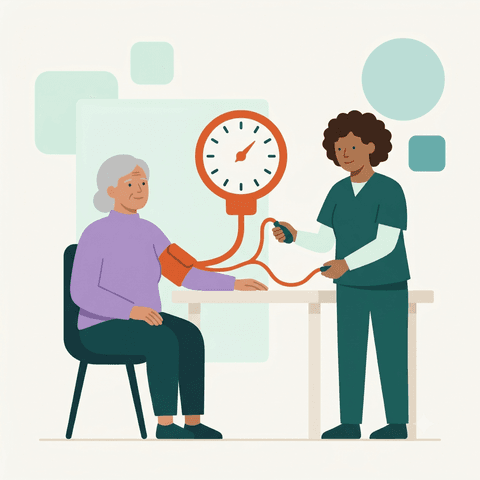
- Blood Pressure — This module explains what blood pressure measures, how systolic and diastolic readings reflect cardiovascular health, and the normative ranges from ideal to hypertensive crisis. It also covers when and how to measure accurately, emphasizing why reliable readings matter for detecting serious risks and protecting patient safety. (1 lesson)
Course FAQ
[OWNER COPY: FAQ questions & answers]